How Much Do Dental Implants Cost in Claremont, CA? A 2026 Pricing Guide
Final cost depends on bone grafting, imaging, and the provider's technology level.
Published: April 9, 2026 | Last Updated: April 9, 2026
Dental Implant Pricing in Claremont, CA: Cost Breakdown by Procedure Type
Claremont sits in the Inland Empire corridor of Los Angeles County. Prices still reflect California's elevated cost of living. Location matters hugely. This covers the post, abutment, and crown. The numbers confirm it. In California, expect higher prices. This reflects regional adjustments from ADA data. Prices have also trended upward since 2023 due to inflation in lab fees, materials, and clinical overhead. Claremont-area providers tend to occupy the middle of the California range, making the market genuinely competitive for patients willing to compare.
At Renov Dental Group, we see most patients invest between $3,000 and $4,500 for a single implant when all three components are bundled. Below is a full breakdown by procedure type:
- Implant post (titanium fixture): $1,500–$2,500
- Abutment connector: $500–$700
- Porcelain or zirconia crown: $1,000–$1,800
- Implant-supported bridge (3-unit): $6,000–$10,000
- All-on-4 full arch: $20,000–$30,000 per arch
- All-on-6 full arch: $25,000–$35,000 per arch
- Mini implants for denture stabilization: $500–$1,500 per implant
- CBCT scan and 3D digital planning: $150–$500 (often bundled at advanced practices)
Single Tooth Implant Cost Components
Understanding each component separately helps patients evaluate quotes accurately. The implant post is the titanium fixture surgically placed into the jawbone. Price varies by brand and provider. Patients should request itemized quotes that break out each component.
Full Arch and Multiple Implant Pricing
This reflects the All-on-4 approach. Four strategically angled implants support a fixed prosthesis. It replaces an entire row of teeth. Full-arch cases done through same-day implant protocols, such as immediate-load All-on-4, can often deliver a temporary prosthetic arch the same surgical day, compressing what would otherwise be a multi-month process.
Factors That Increase or Decrease Your Dental Implant Cost in Claremont
No two implant cases are identical. Several variables move the final price significantly, and knowing them in advance helps Claremont patients budget more accurately. Bone grafting is one of the most common cost adders. These preparatory procedures are not optional; skipping them increases implant failure risk significantly.
Material choice also affects price. Titanium implants remain the standard and the most studied option in peer-reviewed literature. Provider experience and technology level matter too. Guided implant surgery using CBCT scan data and digital surgical templates reduces operative time, minimizes nerve damage risk, and generally improves placement accuracy. This may carry a modest premium but correlates with better outcomes.
Preparatory Procedures That Add to Total Cost
Bone grafting is needed when jaw density is insufficient to anchor an implant securely. Grafts may use synthetic material, donor bone, or the patient's own bone, each with different cost profiles. Sinus lifts are required for upper posterior implants when the sinus floor is too low. Periodontal treatment for active gum disease must be completed before implant surgery. Our team recommends budgeting for at least one preparatory procedure when planning implant treatment, because most patients presenting with a missing tooth have some degree of bone loss at that site.
How Technology Affects Both Cost and Outcomes
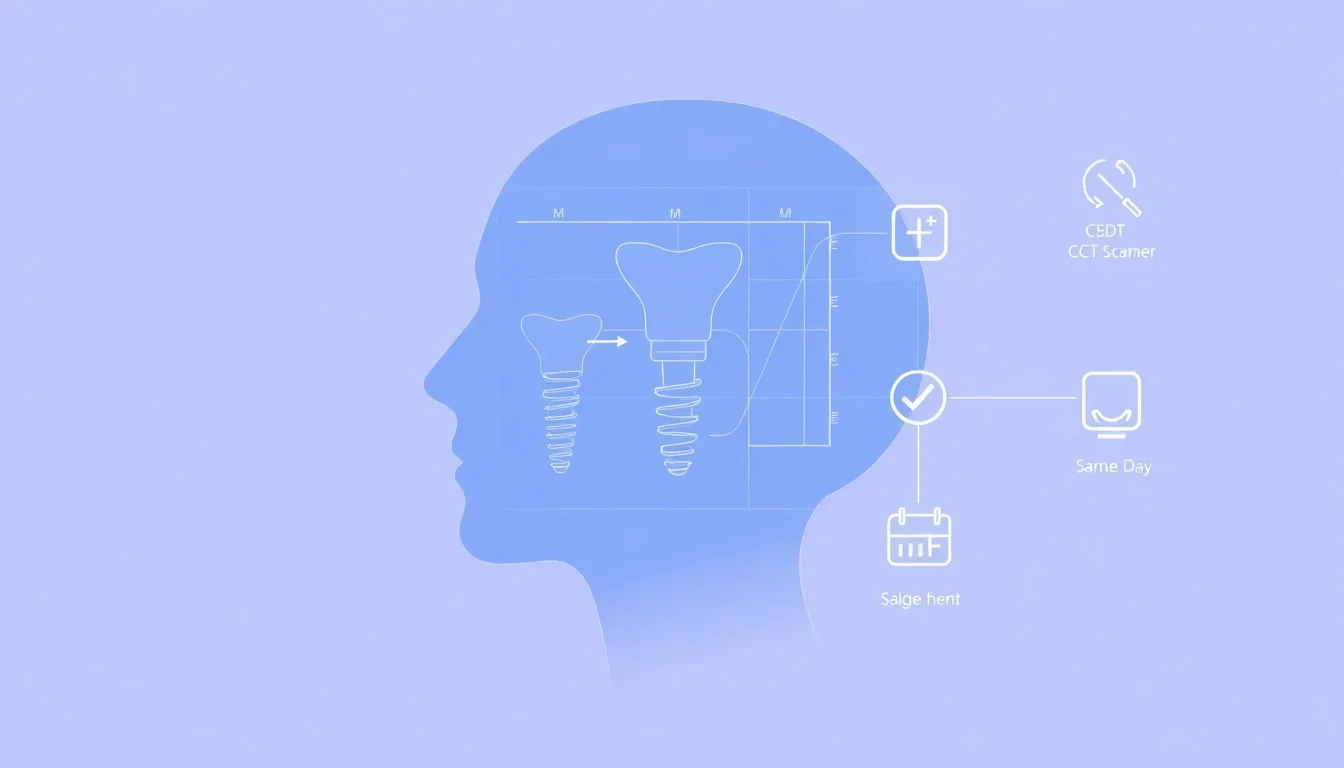
CBCT cone beam scanning provides three-dimensional jaw mapping that traditional flat X-rays cannot replicate. This imaging guides precise implant placement, reducing the risk of hitting nerves, sinuses, or adjacent roots. Guided implant surgery using digital surgical templates created from CBCT data further tightens placement accuracy. Same-day implant placement, also called immediate load implants, is possible in select cases where bone density and socket condition meet specific criteria. Practices offering in-house 3D digital planning, like Renov Dental Group in Claremont, often reduce referral costs and coordination delays by keeping all stages of care under one roof. Patients avoid paying for specialist office visits, reduce the number of imaging sessions, and benefit from a single coordinated treatment plan.
Dental Insurance and Financing Options for Claremont Implant Patients
Insurance coverage for dental implants in Claremont follows the same structure as the broader California PPO market. Delta Dental, Cigna, Aetna, and MetLife PPO plans are among those that offer partial implant coverage. HMO dental plans rarely cover implants at all. Medical insurance may step in when tooth loss results from an accident, illness, or cancer treatment. Patients should request a predetermination letter from their insurer before committing to a treatment plan. This written estimate shows exactly what the plan will pay and prevents billing surprises. Timing procedures strategically, using the current benefit year for preparatory work like extractions and bone grafting, and rolling the implant post into the next benefit year, can effectively double the insurance contribution.
Sunbit uses a soft credit check and reports high approval rates even for patients with imperfect credit, with terms available up to 72 months. HSA and FSA accounts can be used tax-free for dental implant expenses, which effectively provides a discount equal to the patient's marginal tax rate. In-house dental membership plans at practices like Renov Dental Group reduce per-visit costs and typically include discounts on major procedures including implants.
Maximizing Insurance Benefits for Implants
Timing is everything with dental insurance. Begin prep work, extractions, grafts, and imaging in the current calendar year to exhaust the annual maximum. Schedule the implant post placement in January of the following year to access a fresh annual maximum. Ask the billing team whether the crown qualifies as a separate restorative benefit even if the practice's insurer excludes the fixture itself. Confirm whether your dentist participates in your network. Out-of-network providers bill at their full fee, and the insurer reimburses at UCR (usual, customary, and reasonable) rates, leaving the patient responsible for the balance. An in-network provider agreement caps that exposure.
No-Insurance Payment Options in Claremont
Sunbit runs a soft credit check and approves a wider range of applicants, with repayment terms extending to 72 months. Some practices also negotiate direct payment plans for established patients, allowing costs to be spread over several months without involving a third-party lender.
What to Expect at a Dental Implant Consultation in Claremont
A proper implant consultation in Claremont does more than glance at a tooth. It includes a full clinical exam, a review of your medical history, an assessment of bone density and gum health, and ideally a CBCT scan to map the jaw in three dimensions. The provider should assess bite alignment, check for active periodontal disease, and review any systemic health factors like diabetes or medications that affect healing. At Renov Dental Group, consultations include 3D digital planning to show patients precisely where each implant will be placed before a single incision is made. This kind of pre-surgical visualization reduces uncertainty and helps patients understand the process completely.
Walk in knowing what to look for. A trustworthy provider delivers an itemized written cost estimate covering all phases before asking for a commitment. Red flags include quotes without cost breakdowns, no imaging offered, or pressure to sign same-day. Ask whether the practice performs all stages in-house or refers surgery to an outside specialist. In-house providers reduce coordination gaps and often lower the total cost by eliminating specialist referral markups.
Questions to Ask Your Claremont Implant Dentist
Ask about implant volume. How many implants has the dentist placed, and what is the practice's reported success rate? Ask whether guided surgery with surgical stents is used for placement accuracy. Confirm whether the CBCT scan is included in the consultation fee or billed separately. Ask whether the final dental crown is milled in-house using same-day CAD/CAM technology or sent to an outside dental lab, since in-house milling typically saves time and can reduce cost. Finally, ask about the practice's warranty or replacement policy in the event of implant failure. A confident, experienced practice will answer all of these questions clearly.
The Implant Treatment Timeline in Claremont
The standard timeline from implant post placement to final crown runs 3–6 months. This window reflects the osseointegration period, during which the titanium post fuses with the surrounding jawbone. Bone grafting adds 3–6 months of healing before placement can begin. Same-day or immediate-load implants compress the timeline by delivering a temporary crown the same day as the post surgery, though this is appropriate only when bone density and socket conditions qualify. Full-arch All-on-4 cases can often be completed in a single surgical day with a temporary arch delivered immediately. The full sequence, from first consultation through final crown seating, typically spans 6–12 months for standard cases and up to 18 months when grafting is required.
Comparing Dental Implants to Alternative Tooth Replacement Options
Dental implants are the only tooth replacement option that stimulates the jawbone and prevents the bone loss that begins within months of a missing tooth. This biological distinction matters beyond aesthetics. Bone loss alters facial structure over time, causing the sunken appearance associated with long-term denture wear. Those prepared teeth are permanently altered and become dependent on the bridge for structural support.
Results don't lie. When measured over a 15–20 year horizon, the cumulative cost of replacing bridges and dentures often equals or exceeds the upfront implant investment. Long-term math favors implants. Claremont patients with adequate bone density and no uncontrolled systemic disease are generally strong implant candidates. The table below summarizes the key differences.
Dental Implants vs. Alternatives: Cost and Feature Comparison (Claremont, CA – 2026)
| Factor | Single Implant | Dental Bridge (3-unit) | Partial Denture | Full Denture |
|---|---|---|---|---|
| Claremont Cost Range | $3,000–$4,500 | $2,500–$6,000 | $1,000–$3,500 | $1,500–$4,000 |
| Lifespan | 20+ years / lifetime | 10–15 years | 5–10 years | 5–10 years |
| Bone Preservation | Yes (stimulates bone) | No | No | No |
| Adjacent Teeth Affected | None | Yes (requires grinding) | Clasps on neighbors | N/A |
| Feels Like Natural Tooth | Yes | Mostly | No | No |
| Removable | No | No | Yes | Yes |
| Insurance Coverage (Typical) | 50% of major restorative max | 50% of major restorative max | 50% of major restorative max | 50% of major restorative max |
| Maintenance Requirements | Brush, floss, regular checkups | Floss under bridge daily | Remove and clean daily | Remove and clean daily |
| Success Rate (10 years) | 95–98% | 70–90% | Varies widely | Varies widely |
| Best Candidate | Single missing tooth with good bone | 1–2 adjacent missing teeth | Multiple non-adjacent gaps | All or most teeth missing |
Long-Term Value of Implants vs. Bridges and Dentures
Bridges typically last 10–15 years before needing replacement. Dentures require periodic relining and replacement every 5–10 years. The total lifetime cost of dentures, including replacements and relines, often approaches or exceeds the cost of implants placed once and maintained for decades. The bone loss that dentures permit also accelerates, requiring more extensive (and expensive) procedures if a patient later decides to switch to implants. Implants placed when bone volume is adequate sidestep that escalating cost spiral. For a Claremont patient losing a molar at age 45, the calculus strongly favors an implant when health permits. For example, consider a 48-year-old parent in Claremont who lost a lower molar to decay five years ago and has worn a removable partial denture since.
Frequently Asked Questions
How much does a single dental implant cost in Claremont, CA in 2026?
Does dental insurance cover implants at Claremont dental offices?
How long does the dental implant process take from start to finish?
What is All-on-4 and how much does it cost in the Claremont area?
Do I need a bone graft before getting a dental implant, and how much does it add to the cost?
Can I get same-day dental implants in Claremont?
What financing options are available for dental implants in Claremont, CA?
How do I know if I'm a good candidate for dental implants?
Are dental implants at a general dentist as reliable as those done by a specialist?
What is the difference between a zirconia and a titanium dental implant?
What factors influence the cost of dental implants in Claremont, CA?
Are there financing options available for dental implants in Claremont, CA?
How long does the entire process of getting dental implants, including abutment and crown, take?
What is the average success rate of dental implants in Claremont, CA?
Are there any additional costs associated with aftercare for dental implants?
About the Author
Renov Dental Group
Renov Dental Group is Claremont's comprehensive dental practice offering advanced guided implant surgery, cosmetic dentistry, and family care with 3D digital planning and same-day treatment capabilities.
Related Posts
Emergency Dentist in Claremont, CA: What to Do and Where to Go for Same-Day Care
A dental emergency can strike without warning, and knowing where to go in Claremont saves time, money, and teeth. This guide covers exactly what to do in the first critical minutes, how to choose the right provider, and why same-day care at a full-service practice beats the ER every time.

Dental Anxiety Solutions: How Claremont Patients Can Feel Comfortable at the Dentist
Dental anxiety affects millions of Americans and keeps many patients from getting the care they need. This guide covers proven anxiety management strategies, sedation options, and how Claremont's Renov Dental Group creates a calm, comfortable experience for patients of all ages.

Clear Aligners vs Braces for Adults in Claremont, CA: Cost, Timeline, and Results Compared
Deciding between clear aligners and traditional braces as an adult involves more than aesthetics. This guide breaks down the real cost differences, treatment timelines, and clinical results so Claremont adults can make a confident, informed decision before their first orthodontic consultation.